 汉语
汉语
 English
 Français
 Deutsch




Direct Answer: Consistent vaporization requires a well-designed Direct Liquid Injection (DLI) system with precise atomization, rapid heat transfer, and active temperature control. The system presented combines an atomizer that creates nanoscale droplets with a heat exchanger for rapid vaporization, supported by four essential components: a liquid flow controller, vapor process gas filter, programmable logic controller, and mass flow controller. Proper system preparation and dynamic temperature monitoring ensure stable vapor generation, directly impacting process repeatability, film quality, equipment reliability, and manufacturing yield. Learn more about the key components and workflow in the video.
What is the video about?
Core Vaporization System Architecture - Two Main Components
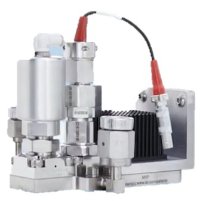 1) The Atomizer
The atomizer is where liquid precursors are transformed into nanoscale droplets. It operates through a carefully orchestrated sequence:
- Carrier gas enters first — This initial gas flow serves a dual purpose: it breaks up liquid into fine droplets and creates a protective barrier that prevents the liquid from contacting hot surfaces before intended vaporization.
- Liquid delivery follows — After carrier gas is established, liquid precursor is introduced and atomized into a fine spray of nanoscale droplets.
- Liquid — The material to be vaporized
- Carrier gas — Breaks liquid into droplets and provides thermal protection
- Compressed air — Opens the pneumatic shutoff valve to allow piezo valve process control
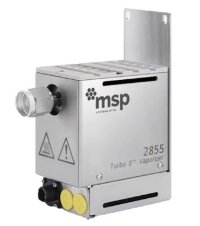
2) The Heat Exchanger
The heat exchanger rapidly converts liquid droplets into vapor:- Optimized flow path — Minimizes contact between droplets and heated surfaces while efficiently transferring heat
- Rapid vaporization — Droplets quickly transition from liquid to vapor state
- Clean vapor exit — Fully vaporized material exits as consistent, contamination-free vapor
Operational Workflow
Vaporization Cycle
- Valve Actuation — Compressed air pressurizes the pneumatic valve, allowing liquid to flow upward toward the piezo valve
- Droplet Formation — An electronic signal opens the piezo valve, releasing pressurized liquid into the atomizer where it meets carrier gas
- Atomization — The liquid is broken into a nanoscale droplet spray within the atomizer chamber
- Heat Transfer — Droplets travel through the heat exchanger where rapid vaporization occurs
- Vapor Delivery — Fully vaporized material exits as consistent vapor for downstream processes
Temperature Management and Control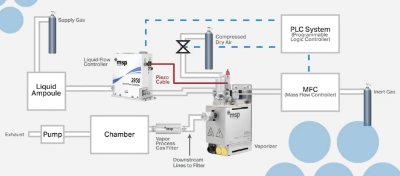
Temperature control and stability is essential for consistent vaporization:
- Hardware
- Temperature control thermocouple – sensor used to adjust power dynamically to maintain setpoint temperature
- Safety limit thermocouple – sensor used to measure overtemperature events and trigger safety mechanisms
- Real Time Monitoring and Safety
- Optimized thermocouple placement allows for robust monitoring and control
- Accurate process visibility ensures safe tool operation
Supporting System Components
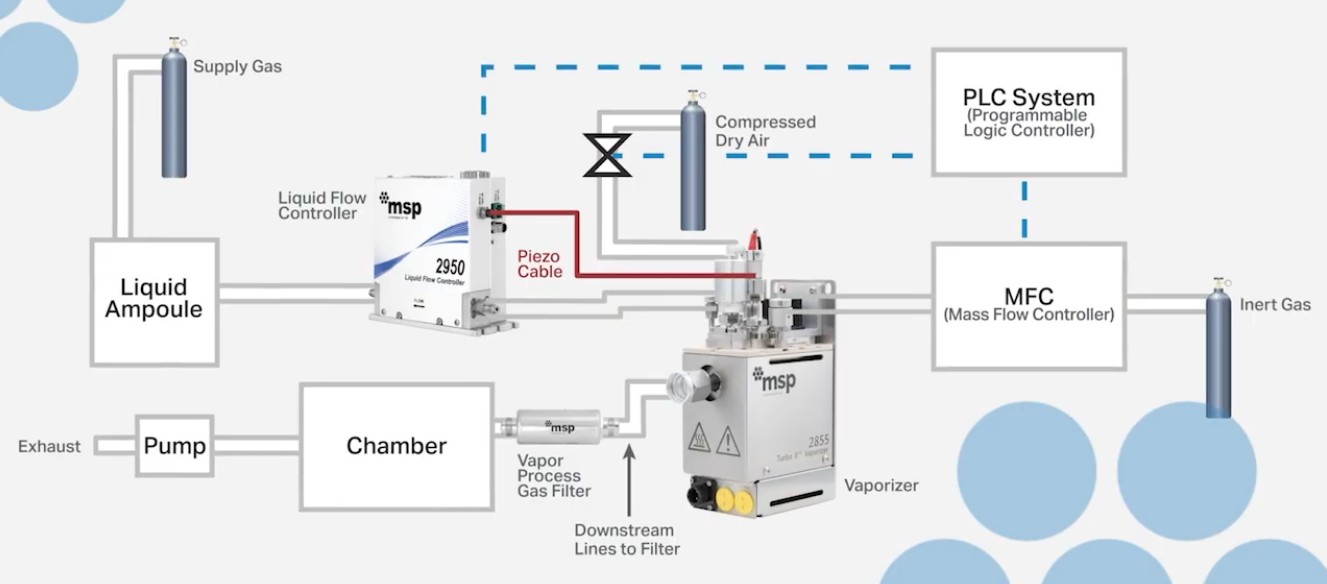
A well-designed DLI vaporization system requires more than just the vaporizer. The following components work together to ensure stable operation, accurate flow control, and consistent vapor generation:
| Component | Function |
|---|---|
| Liquid Flow Controller (LFC) | Ensures precise, repeatable liquid delivery rates independent of pressure fluctuations |
| Vapor Process Gas Filter | Removes impurities and particulates with minimal impact on system pressure drop |
| Programmable Logic Controller (PLC) | Coordinates process steps across all system components for synchronized operation |
| Temperature Controller | Analyzes signals from the control and safety thermocouples in the vaporizer to maintain setpoint and prevent overheating |
| Mass Flow Controller (MFC) | Regulates carrier gas flow precisely to maintain optimal droplet formation and vapor generation |
Each component plays a distinct role in the overall system performance. Together, they create the conditions necessary for reliable, repeatable vaporization.
Why Consistency Matters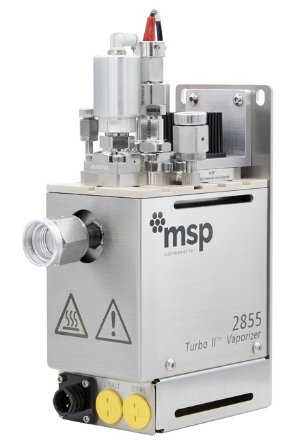
Achieving consistent vaporization directly impacts:
- Process Repeatability — Batch-to-batch uniformity in precursor delivery
- Film Quality — Consistent coating thickness and material properties
- Equipment Reliability — Reduced maintenance through stable operating conditions
- Manufacturing Yield — Fewer defects from vaporization variability
MSP Solutions for Vapor Delivery
MSP, a Division of TSI, offers multiple product options for complete vapor delivery systems designed to meet the demanding requirements of advanced manufacturing:- MSP Turbo II™ 2855PE Vaporizer — Our flagship DLI vaporization system with advanced temperature control and atomization precision.
- MSP Turbo™ Liquid Flow Controller — Precise liquid precursor delivery for stable vapor generation.
- MSP Vapor Process Gas Filter — High-efficiency particle removal with minimal pressure drop.
- Additional MSP vapor system configurations — Tailored solutions for specific material types and process requirements.
Key Takeaways
✓ DLI vaporization combines precise atomization with rapid heat transfer for consistent vapor generation
✓ Active temperature control responds dynamically to process changes, maintaining setpoint stability
✓ Supporting components (LFC, filter, PLC, MFC) are integral to overall system performance and consistency
✓ Consistent vaporization is foundational to manufacturing yield and process reliability
For detailed technical specifications, application guidance, or to discuss your specific vaporization requirements, visit tsi.com/msp-turbo-II or contact our application specialists.