 English
 汉语
汉语
 English
 Français
 Deutsch


 The OmniCount™ PWCPC has been honored with two 2026 OH&S New Product of the Year Awards: the Single-Channel Model 3001 in Industrial Hygiene Exposure Assessment, and the Dual-Channel Model 3002 in Respiratory Protection. Two categories, one platform — recognized for redefining how health and safety professionals monitor ultrafine particle exposure in the field.
Why Choose OmniCount™ PWCPC?
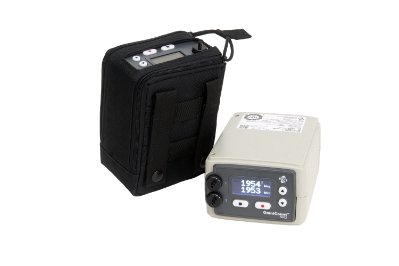 Real-Time UFP Monitoring: Pinpoint ultrafine and nanoparticle sources and exposure trends instantly in demanding work environments.
- True Portability: Operates for more than four hours on battery power in any orientation — tilted, moving, or stationary — for reliable data wherever you need it.
- Broad Detection Range: Detects particles from less than 10 nm to 1,000 nm at concentrations up to 200,000 particles/cm³, covering a wide range of occupational environments.
- Sustainable Operation: Uses distilled water instead of isopropyl alcohol, reducing consumable costs and simplifying daily field workflows.
- Simple Data Management: Collect, view, and export data using the included OmniCount™ PC Software via Bluetooth® LE or USB-C. Built-in onboard storage and intuitive software tools make setup, measurements, and reporting straightforward
- Scalable Configuration: Single-channel Model 3001 or dual-channel Model 3002 — choose the instrument that fits your assessment workflow.
Choose Your Configuration
Single-Channel OmniCount™ PWCPC Model 3001 |
Dual-Channel OmniCount™ PWCPC Model 3002 |
|---|---|
| The compact, single-channel solution for personal and field monitoring. Designed for reliable data collection in demanding environments, the Model 3001 operates in any orientation and supports extended field use with its swappable, and rechargeable battery. Primary Applications
|
The dual-channel solution for professionals who need to compare UFP levels across two locations simultaneously. The Model 3002's second channel enables real-time side-by-side measurements — a critical capability for respirator fit assessments and filtration efficiency studies. Primary Applications
|
Applications for H&S Professionals
OmniCount™ PWCPCs are designed to support a broad range of occupational health and safety workflows:
- Personal and mobile monitoring — real-time identification of UFP levels at the source
- Workplace exposure assessments — work area monitoring to address complex air quality challenges
- Indoor air quality investigations — pinpoint problem areas and track pollutant migration throughout facilities
- Respirator fit assessments — evaluate PPE effectiveness in real time (Model 3002)
- Filtration efficiency studies — simultaneous upstream and downstream UFP comparisons (Model 3002)
- Outdoor and ambient monitoring — characterize and compare environmental conditions across locations
- Source emissions research — identify and document particle-generating processes
- HVAC performance evaluation — assess ventilation system effectiveness
- Field and remote campaigns — reliable data collection in dynamic or hard-to-reach settings
OmniTrak™ Platform Integration
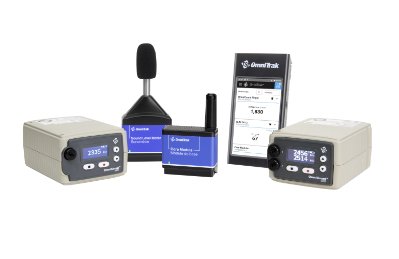 Both the OmniCount™ PWCPC Model 3001 and Model 3002 integrate seamlessly with the OmniTrak™ multi-parameter platform. This integration transforms the OmniCount™ from a standalone portable instrument into a synchronized component of an advanced, networked monitoring system — enabling you to monitor ultrafine particles alongside particulate matter, VOCs, temperature, humidity, noise, and more, across multiple locations simultaneously.
Monitor Multiple Locations Simultaneously
Deploy instruments across rooms, buildings, or sites within a 100-meter Bluetooth Low Energy range. Identify sources and track variations across spaces without manual coordination.
Gain the Bigger Picture
Correlate UFP and nanoparticle measurements with particulate matter, key gases, noise, temperature, and relative humidity for truly comprehensive air quality insight.
Automated Time-Sync
All connected OmniCount™ units and OmniTrak™ modules are automatically synchronized and timestamped — eliminating manual data merging and reducing the risk of inconsistencies.
Flexible Data Export
Export time-aligned datasets as CSV files via USB, or connect wirelessly through TSI Link™ software for cloud storage, automated reporting, and advanced multi-parameter analysis.
Scalable by Design
Add instruments or modules as your monitoring needs grow, without disrupting existing workflows.
- Real-time UFP monitoring in buildings, schools, and aircraft cabins
- Personal exposure studies across multiple workers or zones
- Source emissions research requiring multi-parameter correlation
- Complex occupational health studies demanding synchronized, multi-location data
Learn More About OmniTrak™ Platform Integration