 汉语
汉语
 English
 Français
 Deutsch


VPG-A3 Inline Filter
High efficiency filtration down to 2nm and up to 100 SLPM.The VPG-A3 Vapor Process Gas filter is an ultra-low pressure drop, highly-efficient in-line filter designed for vapor and process gas filtration. This patent-protected 316L SS filter, is chemically and thermally...
Calibration Collar 801679
IAQ Calc Calibration Collar
Manual-Load 30 nm Particle Deposition System 2300G3M – 30nm
This manually-loaded particle deposition system deposits PSL and SiO2 spheres as small as 30 nm. Calibrate and qualify your defect inspection tools with ease, confidence, and efficiency by producing high volumes of high-quality custom contamination standards. Manual loading...
Environmental Particle Counter 3783
Ultrafine particles are omnipresent in our atmosphere, and their number concentration can be very strongly influenced by weather and local particle sources, such as traffic. The Model 3783 Environmental Particle Counter was developed especially for near-freeway monitoring, i.e...
Quest Sound Detector SD-200
The Quest™ Sound Detector SD-200 is a compact, lightweight sound level meter designed for measurement of workplace noise levels.
VelociCalc Rotating Vane Anemometer 5725
Measures velocity, temperature / calculates flow / data logging / articulating, telescopic extension sold separately.
Air Velocity Transducer 8455 Series
The Air Velocity Transducer 8455 (general purpose) is ideal for both temporary and permanent installations for air velocity measurements in research and development labs, manufacturing processes, and other applications.
AeroTrak Cleanroom Condensation Particle Counter 9001
Extremely low false-count rate provides accurate 10 nm measurements at low particle concentrations to confidently monitor mini-environments and process gases—keeping manufactured products safe from nanoparticle contamination.
AeroTrak Portable Particle Counter 9110
Flow Rate 1 CFM (28.3 L/min) ±5% accuracy / Particle Size Range 0.100 to 10.0 µm
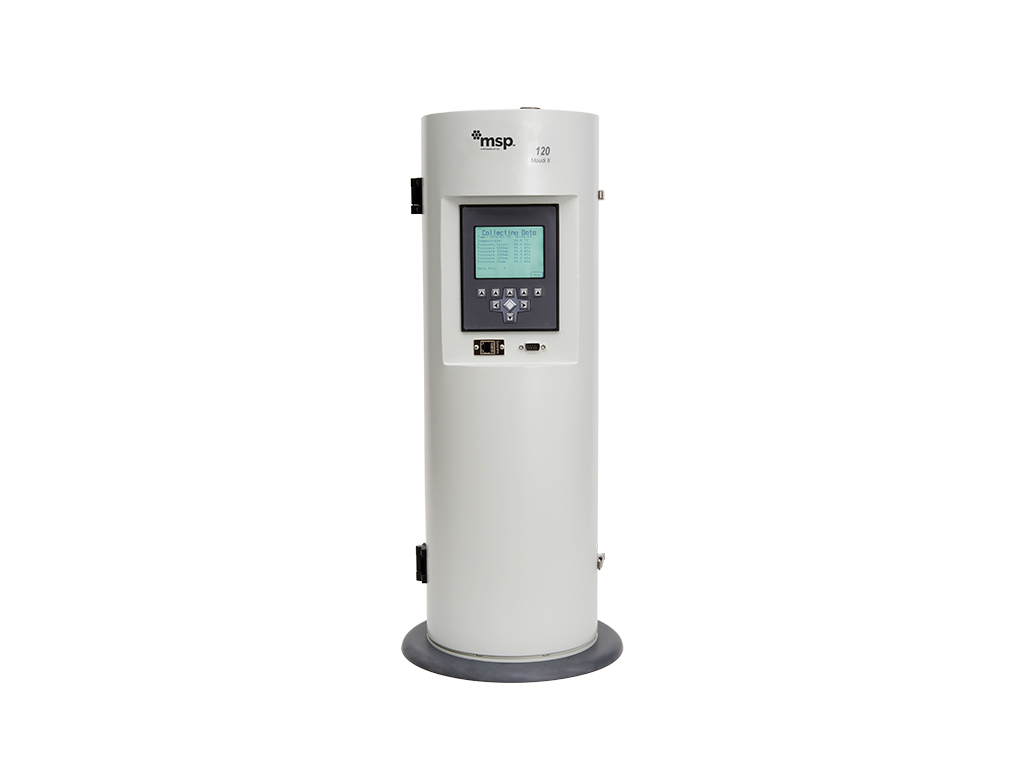
MOUDI II Impactor Model 120R
The MOUDI™ II Impactor Model 120R is a high-resolution rotating cascade impactor designed for precise aerosol size fractionation from 10 µm to 56 nm. Operating at 30 L/min, it combines sharp cut-size performance, low particle losses, and uniform particle deposition to support...
2477 results found