 汉语
汉语
 English
 Français
 Deutsch




For pharmaceutical developers working with orally inhaled and nasal drug products (OINDPs), dissolution testing has long been a significant challenge. The data from these tests are vital for understanding how a drug will perform once delivered to the lungs. Yet, the industry has lacked a standardized method to produce reliable results, creating uncertainty for teams developing new and generic therapies.
This post explores the common hurdles in OINDP dissolution testing and introduces a purpose-built solution designed to bring clarity and reproducibility to this critical process.
The Problem With Traditional Inhaled Dissolution Testing
Developers of inhaled products face a unique set of obstacles. There is no widely accepted industry standard for dissolution testing, which leads to several downstream problems. Teams often struggle to generate reproducible and discriminatory data. This makes it difficult to confidently compare a generic formulation to its reference product or understand how the fine particle dose (FPD) dissolves under conditions that mimic the lung environment.
The root of the issue lies in the tools themselves. Traditional dissolution methods, originally designed for tablets and other solid oral dosage forms, are not well suited for the specific requirements of inhaled products.
Key limitations include:
- Low Dose Masses: Inhaled therapies often involve very small dose masses, which are difficult to handle and measure accurately with conventional equipment.
- Filter-Based Collection: Particles are typically collected on filters, but transferring these samples for dissolution testing is cumbersome.
- Inappropriate Media Volumes: The small fluid volumes in the lungs are not replicated by the large media volumes used in standard tablet dissolution apparatuses.
This mismatch creates practical challenges. The manual transfer of collected doses from filters to a separate testing unit can lead to sample loss, variability in results, and a risk of cross-contamination. Inhaled product teams need a robust, reproducible, and regulator-ready method for measuring dissolution that accurately reflects aerosol deposition and supports confident decision-making.
Regulatory and Development Context
Regulators are increasingly encouraging the use of advanced in vitro tests to build a comprehensive data package for OINDPs. The U.S. Food and Drug Administration (FDA), for instance, promotes a weight-of-evidence approach for demonstrating bioequivalence in generic inhaled products. This strategy relies on multiple, complementary in vitro tests to create a full picture of a product's performance.
Strong, discriminatory in vitro data can strengthen scientific arguments during product development and reduce uncertainty when comparing reference and generic formulations. In some cases, where scientifically justified, this robust data can even help reduce reliance on more expensive and time-consuming in vivo or clinical endpoint studies. Inhaled dissolution testing is a key component of this broader in vitro test suite.
The Inhaled Dissolution Apparatus (IDA) enables developers to generate the kind of robust and reproducible dissolution data that aligns with this FDA-encouraged approach. It provides a dedicated platform that integrates sample collection and dissolution testing into a single, seamless workflow.
A Purpose-Built Solution: The Inhaled Dissolution Apparatus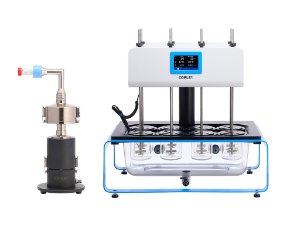
The Inhaled Dissolution Apparatus (IDA) is a scientifically supported, fully integrated system designed to overcome the limitations of traditional methods. It delivers reproducible and discriminatory dissolution data across various devices, formulations, and dosing levels. By combining dose collection and dissolution into one platform, it helps to eliminate the manual transfer steps that introduce variability and sample loss.
This purpose-built system is designed for all types of OINDPs, including metered-dose inhalers (MDIs), dry powder inhalers (DPIs), and nebulizers.
Primary Use Case: Generic and Late-Stage Development
The IDA is particularly valuable for generic product development and late-stage formulation optimization. Its primary application is comparative dissolution testing, which supports critical development activities. Teams can effectively use it for:
- Generic vs. Reference Product Comparison: Directly compare the dissolution profiles of a generic formulation against the reference listed drug to support bioequivalence arguments.
- Understanding Formulation Differences: Gain insights into how minor changes in a formulation affect its dissolution behavior, enabling more informed development decisions.
- Generating Regulator-Relevant Data: Produce high-quality in vitro data suitable for inclusion in regulatory submissions, strengthening the overall evidence package.
A Note on Nasal Drug Product Testing
While the primary application of the IDA is for orally inhaled products, it is also compatible with inlets used for nasal drug product testing. However, investigations into the dissolution of nasal products have not yet been extensively performed with the IDA. For customers interested in this application, a specific configuration may be more appropriate to assess how a product might dissolve in the nasal cavity. This would likely involve connecting a glass expansion chamber directly to the inlet of the IDA dose collector.
Streamlining Your Inhaled Product Development
In the complex field of respiratory drug delivery, having access to reliable data is paramount. The challenges of traditional dissolution testing have long been a source of frustration and uncertainty for developers.
The Inhaled Dissolution Apparatus (IDA) offers a modern solution. By providing a dedicated platform that integrates sample collection and dissolution, it helps teams generate the reproducible, discriminatory data needed to de-risk development programs, support regulatory submissions, and bring safe and effective inhaled therapies to patients faster.