 汉语
汉语
 English
 Français
 Deutsch




Managing indoor air quality (IAQ) for large facilities such as corporate campuses, government buildings, hospitals, and educational institutions presents unique challenges. With diverse environments - from offices and laboratories to auditoriums and cafeterias - maintaining consistent air quality across large-scale facilities requires more than basic ventilation. A comprehensive IAQ monitoring strategy helps optimize operational efficiency, reduce environmental risks, and better support occupant well-being.
Strategic IAQ Monitoring
Effective IAQ management starts with understanding the complexity of the building layout and the diversity of indoor environments. Different spaces often require customized monitoring based on occupancy, usage and potential pollutant sources. For instance, labs and kitchens may require frequent sampling for specific contaminants, while conference rooms may benefit from focused CO₂ monitoring for ventilation control.
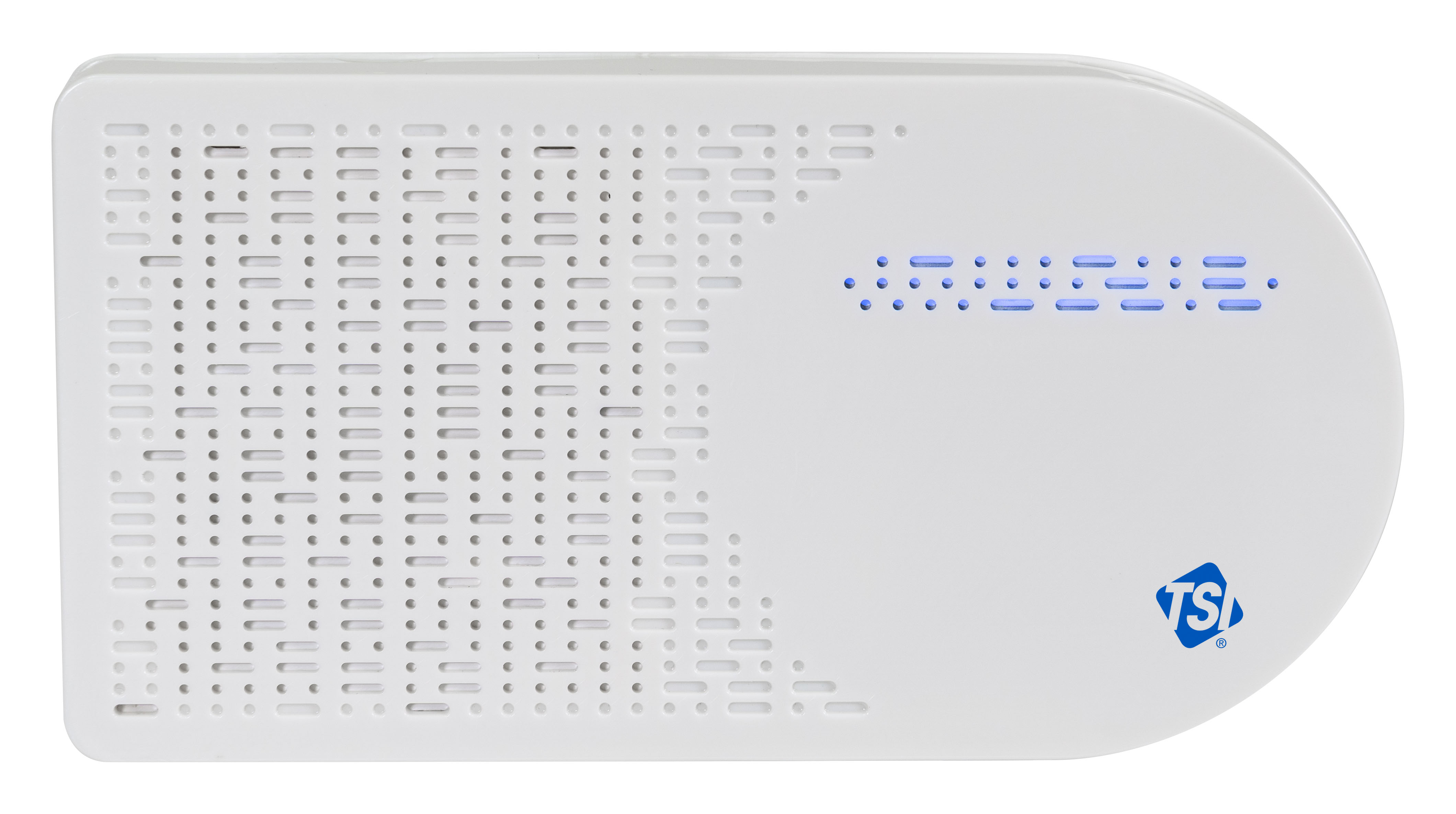 Optimizing an IAQ monitoring strategy requires a strategic mix of fixed and portable sensors integrated through a central data platform. For continuous, real-time monitoring, TSI’s AirAssure™ IAQ Monitors can be deployed in key areas to track CO₂, particulate matter (PM), temperature, and humidity.
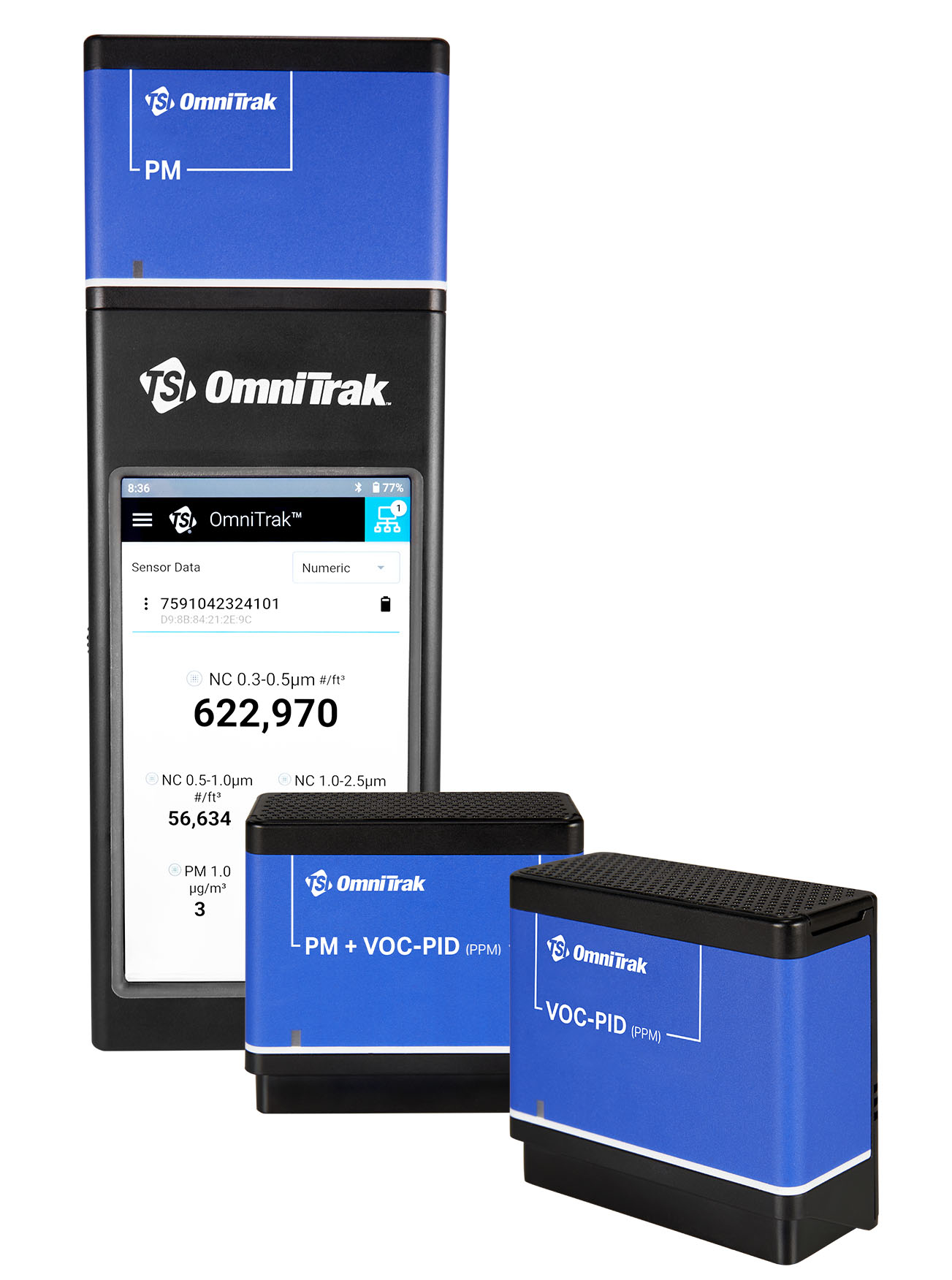 To enhance flexibility, TSI OmniTrak™ Solution offers portable, handheld options for diagnostics, validation, and short-term air quality monitoring during events or renovations. This adaptable design delivers real-time, actionable data to support environmental assessments and occupant well-being across the facility.
Turning Data Into Actionable Insights
Once the monitoring infrastructure are in place, the focus shifts to leveraging data for practical decision-making. TSI Link™ Platform provide centralized, cloud-connected platforms for facility managers to visualize conditions across multiple space, receive automated alerts, and identify trends. This empowers faster decisions, such as when to increase ventilation or to schedule maintenance, and supports long-term improvements (such as optimizing HVAC performance).
Integrating IAQ data with Building Management Systems (BMS) further enhances IAQ strategy. Real-time air quality data can trigger ventilation adjustment, air filtration cycles, or send occupant notifications. This not only helps to protect health; it also balances air quality and energy efficiency.
Integrating IAQ data with Building Management Systems (BMS) further enhances IAQ strategy. Real-time air quality data can trigger ventilation adjustment, air filtration cycles, or send occupant notifications. This not only helps to protect health; it also balances air quality and energy efficiency.
Scalability and Compliance
Scalability is a key benefit of optimized IAQ Strategy. Whether managing a single building or a network of facilities, a standardized monitoring framework ensures consistent data, simplifies reporting, and supports informed decision-making at scale. As regulatory expectations increase and green building certifications such as LEED and WELL place greater focus on indoor air quality, a robust monitoring strategy supports both compliance and long-term sustainability goals.
Optimizing IAQ monitoring for large facilities is a proactive investment in the health, safety, and satisfaction of building occupants. With the right tools, data insights, and integrated systems, facility managers can turn complex environments into controllable, healthy spaces. The result is a more resilient facility, improved productivity, and stronger stakeholder confidence.
Optimizing IAQ monitoring for large facilities is a proactive investment in the health, safety, and satisfaction of building occupants. With the right tools, data insights, and integrated systems, facility managers can turn complex environments into controllable, healthy spaces. The result is a more resilient facility, improved productivity, and stronger stakeholder confidence.
Explore TSI IAQ Instruments