 汉语
汉语
 English
 Français
 Deutsch




Why Wildfire Smoke Is a Growing IAQ Risk
Wildfires are no longer isolated or seasonal events. A warming climate is amplifying wildfire activity, making fires more frequent, more intense, and longer-lasting. Over the past two decades, extreme wildfire activity has more than doubled globally, with fire seasons starting earlier and extending further into the year. At the same time, wildfire smoke is spreading far beyond fire zones, affecting air quality across entire regions and increasing concentrations of fine particulate matter (PM2.5).1
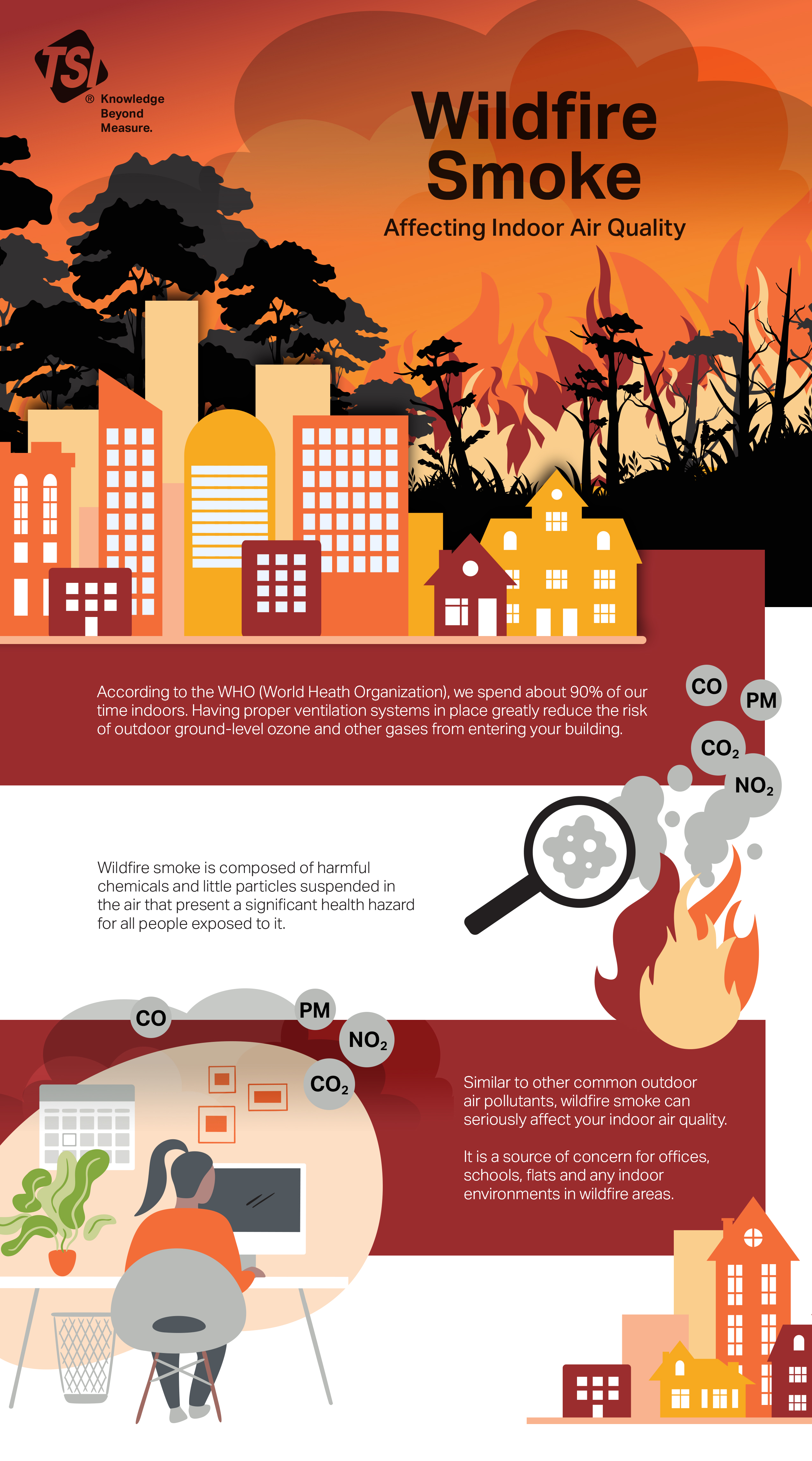
While people naturally turn to indoor spaces for protection when smoke levels rise, indoor air is not automatically safe. PM2.5 and other airborne pollutants can infiltrate buildings through windows, doors, ventilation systems, and small gaps in the building envelope. Even when smoke is not visible or easy to smell, these particles can accumulate indoors and affect the air occupants breathe. 2,3,4
Understanding how wildfire smoke enters and behaves indoors is the first step in reducing exposure. The next step is taking practical measures to reduce infiltration, improve filtration, and monitor changing air quality conditions.
.jpg "2022-Wildfire-Infographic_2-(3).jpg")
Ways to Reduce Indoor Smoke Exposure
1. Keep Windows, Doors and Outdoor Openings Closed
The most direct way for wildfire smoke to enter a building is through open windows, doors, and other outdoor openings. Keeping them closed as much as possible when smoke is present helps reduce the amount of contaminated outdoor air entering the building.
2. Seal Gaps to Reduce Smoke Infiltration
Even with windows and doors closed, wildfire smoke can still enter through small gaps around doors, windows, vents, and other leakage points. Sealing visible gaps and checking dampers can help reduce smoke infiltration and improve the effectiveness of other indoor air quality measures.
3. Run HVAC Systems in Recirculation Mode
Set your HVAC system to recirculation mode, where available, to help reduce outdoor smoke entering the building. Keep the fan running to help filter indoor air, then return to normal settings when outdoor air improves.
4. Upgrade to High-Efficiency Filters (MERV 13 or Higher)
Higher-efficiency filtration can help reduce fine particle levels indoors. If the HVAC system can accommodate them, MERV 13 or higher filters can help improve filtration of fine smoke particles. Because smoke can build up on filters quickly, inspect them regularly and replace them as needed.5
5. Use Portable Air Cleaners in Occupied Spaces
Portable air cleaners with HEPA filtration can help reduce fine particles indoors. They are especially useful in offices, classrooms, bedrooms, and other enclosed spaces where people spend the most time.
6. Create a Clean Air Room
A clean air room can help reduce indoor smoke exposure when conditions are severe. Choose a room with few windows and doors, keep it closed as much as possible, and run a portable air cleaner continuously. Spending more time in this space when smoke levels are high can help reduce exposure to fine particles.
7. Limit Indoor Activities that Add Particles
Some everyday indoor activities, such as vacuuming, sweeping, frying food, burning candles, smoking, or using gas and other combustion appliances, can add particles to indoor air. Cutting back on these activities when outdoor smoke is present can help keep indoor air cleaner.
8. Monitor Indoor and Outdoor Air Quality
Outdoor smoke conditions can change quickly and directly affect indoor air quality. Monitoring outdoor Air Quality Index (AQI) and indoor PM2.5 levels helps teams make informed decisions about ventilation, filtration, occupancy, and when conditions are safe to return to normal.
Case in point: A leading children's hospital network in San Francisco Bay Area uses TSI BlueSky™ Air Quality Monitors and TSI Link™ Solutions to remotely track IAQ across its facilities. This enables real-time monitoring and faster response during wildfire smoke event. Read the full customer story.
In addition to improving indoor conditions, it is also important to stay informed about outdoor smoke and fire activity.
Stay Ahead of Wildfire Smoke
Monitor Air Quality Index (AQI) Forecasts and Fire Activity
Monitoring AQI forecasts and the Fire and Smoke mapping tools can help anticipate changes in air quality and support earlier response. These resources combine air quality data, alerts, satellite detection, and smoke movement information to identify nearby fire activity and enable proactive planning before conditions worsen.
Strengthen Wildfire Smoke Preparedness
Wildfire smoke is an increasingly common indoor air quality challenge. Preventive planning, effective filtration, and real-time monitoring can help organizations respond more effectively to changing smoke conditions. TSI supports this effort with indoor and outdoor air monitoring solutions that provide greater visibility into air quality conditions during wildfire smoke events.
Learn more on Wildfire and IAQ Solutions
Sources
1 NASA - Wildfires and Climate Change
2 AirNow - Reduce Exposure Indoors
3 U.S. Environmental Protection Agency - Increasing Impacts of Wildfire Smoke
4 U.S. Environmental Protection Agency - Preparing for Smoke and Heat
5 U.S. Environmental Protection Agency - Strategies to Reduce Exposure Indoors