See What Optical Methods Miss

CMP Slurry Characterization

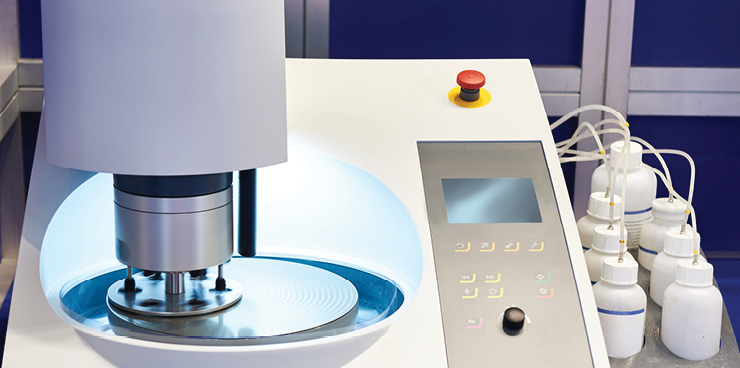
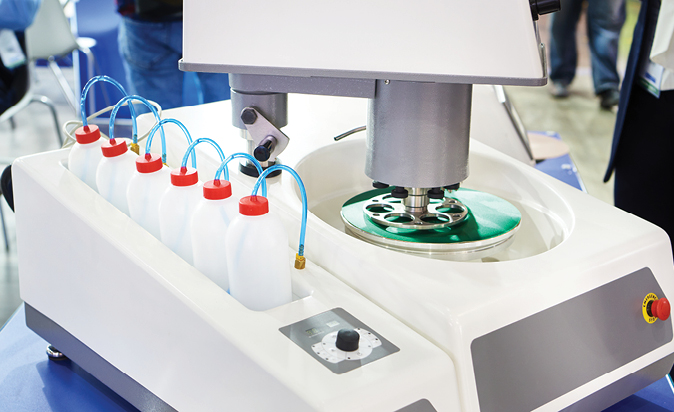
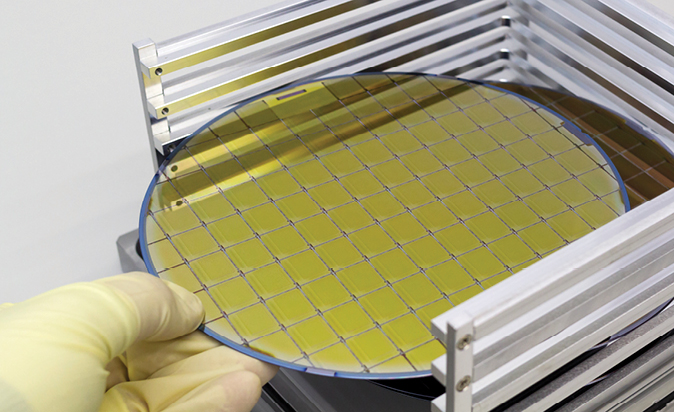
Chemical Mechanical Planarization (CMP) is a critical process in semiconductor manufacturing, using carefully engineered slurries to achieve the ultra-flat, defect-free wafer surfaces demanded by advanced device nodes. These slurries are complex, multicomponent colloidal systems comprising abrasive nanoparticles. dispersed within a liquid chemical matrix of oxidizers, corrosion inhibitors, surfactants, and polymeric additives. The interplay between chemistry and mechanical abrasion governs the material removal process, making precise control of slurry composition essential to yield.

At the heart of that control is the abrasive particle size distribution (PSD): it is a key factor influencing the material removal rate (MRR), within-wafer non-uniformity (WIWNU), surface roughness, and defect density, making it an important parameter in CMP process optimization. Yet the most widely used characterization technique — dynamic light scattering (DLS) — cannot reliably measure sub-30 nm fines, and resolve multimodal distributions, . TSI's Atomizer and Scanning Mobility Particle Sizer (SMPS) system changes that.

The Limits of Conventional Optical Measurement

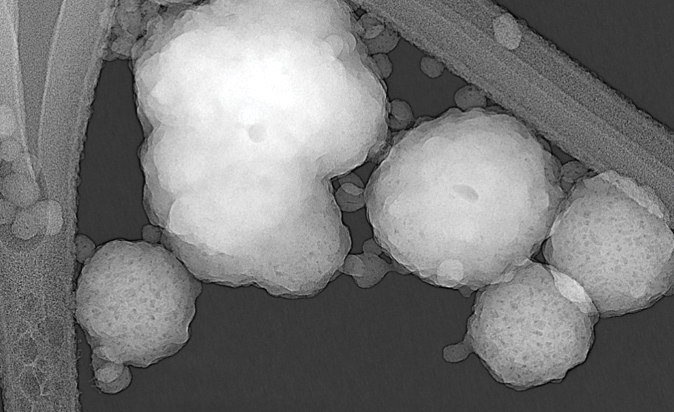
Dynamic light scattering (DLS) has long been the default tool for CMP slurry characterization, but its fundamental physics work against accurate measurement in polydisperse systems. Because scattered light intensity scales with particle diameter to the sixth power, DLS is inherently biased toward larger particles - a single 200 nm agglomerate can overwhelm the signal from millions of 20 nm primary particles. The result is a volume-weighted distribution that masks the true multimodal structure of the abrasive phase. DLS also relies on assumptions about particle refractive index, making cross-material comparisons less reliable, and struggles to detect particles below approximately 30 nm - precisely the size range where fines can influence slurry chemistry, surface reactivity, and planarization performance. For next-generation devices with shrinking process margins, these blind spots can increase yield risk.

The TSI® Solution: Atomizer + SMPS

TSI's Atomizer and Scanning Mobility Particle Sizer (SMPS) system provides a fundamentally different approach to CMP slurry metrology. A slurry sample is introduced into the Atomizer, which creates fine droplets using an atomization nozzle. After the droplets are dried, only the non-volatile abrasive particles remain as dry aerosol particles.  The airflow containing these dry aerosol particles is then drawn to the SMPS, where a differential mobility analyzer (DMA) separates particles by electrical mobility and a condensation particle counter (CPC) measures each size-segregated fraction. The result is a true, number-based particle size distribution, without relying on optical properties or refractive index assumptions. By counting individual particles rather than measuring scattered light intensity, the system accurately characterizes both sub-30 nm particles and larger agglomerates, revealing the full multimodal particle size distribution.

From Slurry Development to Process Control

Whether you're developing the next generation of CMP slurries or ensuring consistent polishing performance in high-volume semiconductor manufacturing, aerosolization + SMPS provides the high-resolution particle characterization needed for confident decision-making. Use it to qualify incoming slurry lots by detecting agglomerates and oversized particles before they impact wafer quality, continuously monitor particle size distributions to identify process deviations in real time, or optimize slurry formulations by understanding the complete abrasive particle population rather than a volume-weighted average. The result is better-informed process control, reduced defectivity, improved slurry consistency, and higher manufacturing yield.

Key Features of TSI Slurry Testing Solutions

Accurate Abrasive Particle Size Distributions

Resolve the full multimodal distribution — including sub-20 nm fines and large-particle agglomerate tails — that conventional optical methods cannot detect. Number-based sizing ensures every particle population is represented proportionally, giving formulators and process engineers a true picture of slurry composition rather than an intensity-weighted average dominated by the largest particles present.

常见问题

Q. What are the main benefits of measuring slurry particle size?

Accurate measurement helps you identify ”killer” particles that can cause defects on semiconductor wafers. Identifying these anomalies early helps reduce production costs and improves overall product reliability.

Q. How does the AIM software assist with slurry analysis?

The AIM software includes built-in features that enable you to select and view number and volume distribution data easily. This streamlines your post-processing tasks and provides clear, actionable insights into your overall slurry quality.