 汉语
汉语
 English
 Français
 Deutsch



Table of Contents
The Reality of Noise-Induced Hearing Loss (NIHL)
Repeatedly exposing your unprotected hearing to high noise over a long enough period of time poses a risk to your hearing acuity, which can be detected as a classic notch at 4kHz in a health surveillance audiogram. The damage has already been done by this time though and the notch will widen and deepen meaning even poorer hearing over time if unmitigated exposure continues. Indeed, the higher the level, the shorter the time before that potential damage occurs with the risk doubling for every 3dB increase.
The Biological Impact of Sound
Typically, depending on legislative limits, up to 85dBA over eight hours is considered ‘safe’ which equates to 88dBA over four hours, or 91 over two hours. This cumulative noise dose, alongside risks from instantaneous high impulsive (peak) sources, contributes to a risk of permanent damage. Beyond the ears, NIHL is linked to the onset of dementia, high blood pressure, and heart disease, while tinnitus creates significant daily distress and sleep disturbances.
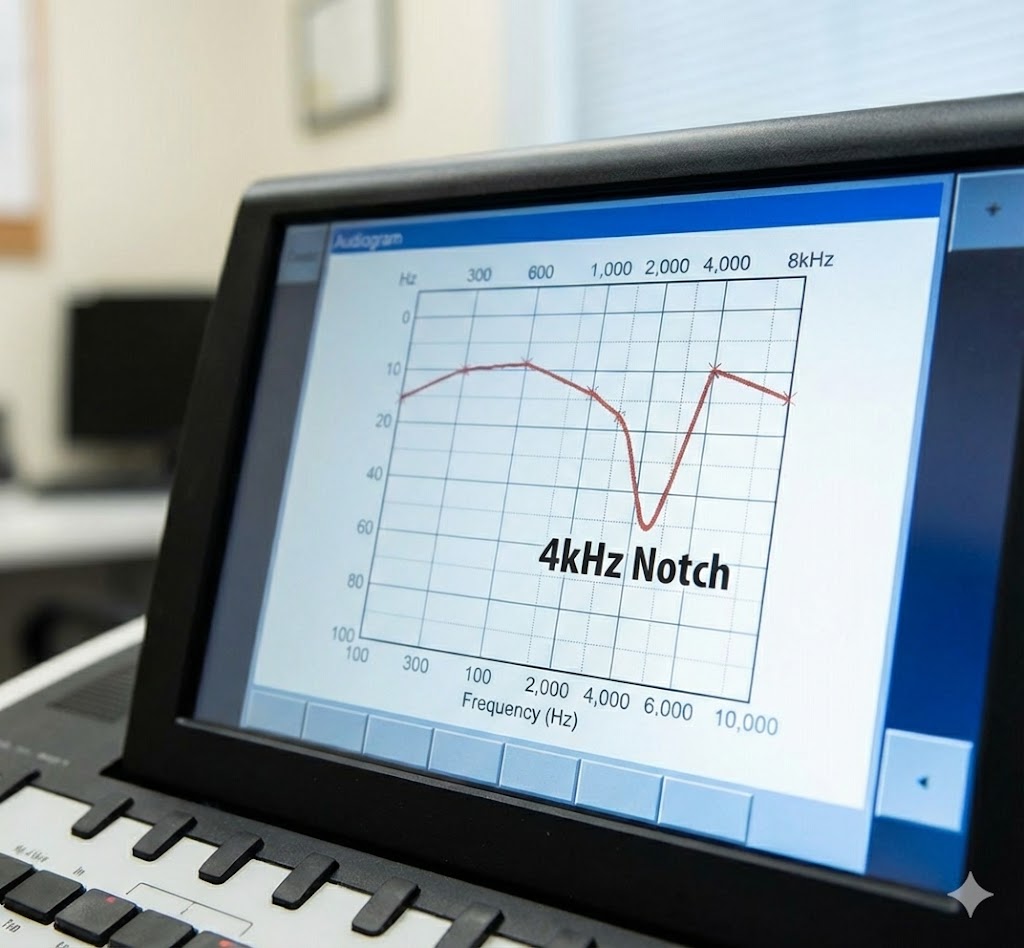
Visualizing the 4kHz notch: A clear clinical indicator of noise-induced damage.
Legislation, Enforcement, and the 2024 HSE Campaign
It is the 50th anniversary of the introduction in the UK of the Health & Safety at Work Act this year and 20 years since the EU introduced specific noise related legislation known in the UK as the Control of Noise at Work Regulations (2005). More recently, the personal protective equipment (PPE) regulation (EU) 2016/425 recognized harmful noise as an irreversible health risk, moving hearing protection into category III (complex PPE).
In May 2024, the UK Health & Safety Executive (HSE) commenced a campaign of up to 5,000 targeted inspections in known noisy sectors. The HSE has coined the acronym CUFF relating to hearing protector condition, use, fit and fit for purpose. This initiative aims to address the alarming statistic that only 60% of workers supposedly using hearing protection are in fact protected due to incorrect use or poor fit.
Acoustic Monitoring Solutions
Precision Noise Monitoring for Compliance
Meeting the HSE's 'fit for purpose' requirement starts with accurate data. Connect your risk assessment to real-world exposure with TSI’s range of noise dosimeters and sound level meters, designed for high-precision data logging and seamless reporting.
Explore Noise Monitoring Tools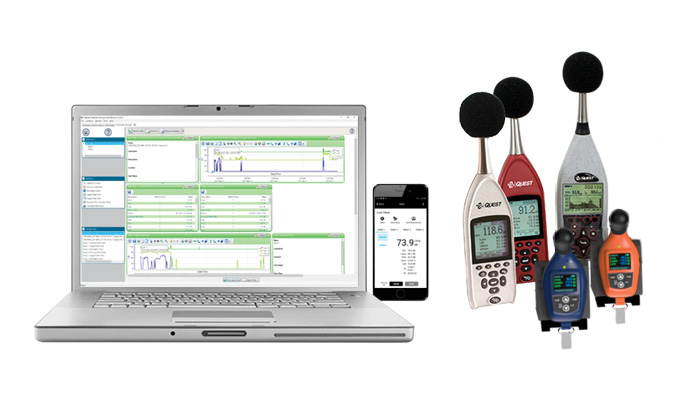
Advancements in Noise Measurement Technology
Having adequate quantitative data on which to make risk assessment is often lacking. While an objective measurement of noise exposure is not a mandatory requirement, it adds critical weight to a risk assessment. Instrumentation has evolved from cigarette-packet-sized analogue devices to modern digital noise dosimeters with immense processing power.
The Digital Shift: Monitoring for the Masses
Modern digital noise dosimeters offer data logging, octave band analysis, and audio recording. Connectivity has extended to mobile apps, allowing users to monitor their workforce remotely without disturbance. This shift toward ubiquitous wearable technology provides a paradigm shift in hearing safety, enabling H&S generalists to perform high-level analysis previously reserved for specialists.

Remote monitoring: Digital dosimeters allow for real-time data access via mobile apps.
Frequently Asked Questions
What is the first sign of noise-induced hearing loss?
The primary indicator is a classic "notch" at the 4kHz frequency detected during a health surveillance audiogram. This clinical sign indicates that damage has already occurred, and the notch will likely deepen or widen if the individual continues to be exposed to high noise levels without protection.
How does noise intensity relate to exposure time?
Hearing damage risk doubles for every 3dB increase in noise intensity. While 85dBA is considered safe for an eight-hour shift, 88dBA is only safe for four hours, and 91dBA for two hours, as these levels all result in the same cumulative noise dose over time.
What other health conditions are linked to hearing loss?
Hearing loss is associated with significant health issues including the early onset of dementia, high blood pressure, and heart disease. It can also cause tinnitus, a distressing condition involving internal ringing or buzzing that often leads to severe sleep disturbances, stress, and difficulty concentrating on daily tasks.
What is the 2024 HSE noise inspection campaign?
The UK Health & Safety Executive (HSE) launched a targeted campaign in May 2024 involving 5,000 inspections in noisy industrial sectors. These inspections focus specifically on hearing protection compliance and the effectiveness of noise management strategies for the first time since the 2005 regulations were enacted.
What does the acronym CUFF stand for?
CUFF stands for Condition, Use, Fit, and Fit for purpose regarding hearing protection equipment. This framework helps employers and inspectors evaluate whether PPE is being maintained properly, used correctly by staff, fitted accurately for the individual, and appropriate for the specific noise environment present.
Why is hearing protection now Category III PPE?
Hearing protection was reclassified as Category III (Complex PPE) under regulation (EU) 2016/425 because harmful noise is recognized as an irreversible health risk. This higher classification reflects the serious nature of hearing damage and requires more stringent quality control and certification for protective equipment used in workplaces.
How effective is the current use of hearing protection?
Research suggests that possibly only 60% of workers using hearing protection are actually protected from noise-induced damage. Poor fit, inconsistent use, and lack of proper condition monitoring often render PPE ineffective, emphasizing the need for objective quantitative measurement to ensure workers are truly safe from exposure.
What are the advantages of digital noise dosimeters?
Digital noise dosimeters provide high processing power for data logging, octave band analysis, and even audio recording. Unlike older analogue models, modern units connect to mobile apps, allowing safety managers to monitor workforce noise levels remotely in real-time without disrupting the worker's tasks or productivity.
Is objective noise measurement required by law?
While objective measurement is not always a mandatory requirement, it is essential for prescribing "fit for purpose" hearing protection. Quantitative data adds significant weight to a risk assessment and ensures that PPE attenuation levels (SNR/HML) are matched correctly to the actual measured noise levels.
What is meant by "noise dosimetry for the masses"?
This refers to the new era of low-cost, easy-to-use wearable technology that allows for more frequent monitoring across larger groups of workers. It empowers H&S generalists who may lack advanced acoustic skills to gather accurate, actionable data that traditionally required specialized industrial hygiene intervention.
References
- ILO/WHO reports on occupational disease and noise impacts.
- British Safety Industry Federation (BSIF) "Just because it fits" campaign, April 2024.
- Expert research regarding the limitations of traditional NIHL prevention strategies.
- HSE Research Report (2009) regarding the ineffectiveness of hearing protection in the field.