 汉语
汉语
 English
 Français
 Deutsch




Why Vapour and Gas Exposure Still Demands Attention
Across manufacturing, oil & gas, chemical processing, and pharmaceutical production, workers continue to face exposure to airborne dusts, gases, and vapours as an unavoidable by-product of the processes that keep these industries running. In the UK, employers remain bound by the Control of Substances Hazardous to Health (COSHH) Regulations 2002 and the EH40 workplace exposure limits list. In the US, 29 CFR 1910.1000 sets permissible exposure limits (PELs) enforced by OSHA, while ACGIH Threshold Limit Values (TLVs) are widely adopted as best-practice benchmarks. The principle is universal: hazard identification, risk assessment, and — where a significant risk of exposure could occur — a defensible exposure monitoring programme.This article, the first in a two-part series, revisits the fundamentals of vapour and gas sampling for anyone building an exposure monitoring strategy today. Part Two moves from theory into practice: sample media selection, sampling train setup, and calibration.
Volatile organic compounds (VOCs) — many of them hydrocarbons — are among the most frequently encountered airborne hazards in industrial hygiene practice, released continuously in oil & gas, chemical, and pharmaceutical processes, but often at their highest concentrations during maintenance, vessel entry, and turnaround work rather than routine operation. VOCs also turn up well beyond these "obvious" sectors: fabricated metal (degreasing, solvent cleaning), textiles and furniture (adhesives, coatings), printing (inks, thinners), and general painting operations. This is why vapour exposure risk rarely sits in one easily-fenced-off area of a site — it's distributed across the shift and the process.
What makes VOCs distinct is vapour pressure: compounds with significant vapour pressure at normal ambient temperature volatilise readily and are easily inhaled during normal breathing. This is exactly why static area monitoring alone is insufficient — breathing-zone concentration can differ meaningfully from a fixed monitoring point just metres away.
The Health Stakes: Acute and Chronic Effects
Unmanaged vapour exposure carries risk on two timescales. Acute exposure to high concentrations can pose an immediate risk to life — asphyxiation, narcosis, or acute toxicity, particularly in confined spaces or following containment failure. Chronic exposure to lower concentrations, sustained over months or years, is linked to long-term illness, occupational cancers, and organ damage — including ototoxicity, hearing loss driven by chemical rather than noise exposure. Solvents, certain nitriles, and metals and their compounds are recognised ototoxicants, and where these coexist with occupational noise the combined risk to hearing is compounded. This dual timescale is exactly why direct-reading instruments and laboratory-based exposure monitoring serve different, complementary purposes.Direct Reading vs. Sample-and-Analyse
Direct-reading instruments (electrochemical, PID, or infrared gas detectors) suit immediate hazard detection — confirming an atmosphere is safe to enter, or alarming before a short-term exposure limit (STEL) is breached. What they generally can't do is characterise the fluctuating, low-level exposure that most exposure limits — expressed as time-weighted averages (TWAs) — are designed to assess.For that, hygienists turn to sample collection followed by laboratory analysis, often using one of three established methods:
Grab sampling — a discrete volume of workplace atmosphere collected in an airtight container for lab analysis; useful for a "snapshot" concentration, not time-weighted exposure.
Bubbler or impinger sampling — drawing air through a liquid reagent that reacts with the target contaminant, still used for compounds unsuited to sorbent-based collection.
Sorbent tube sampling — air passed through a tube packed with adsorbent media (activated charcoal or a suitable porous polymer) that captures the target vapour or gas for later desorption and analysis, typically per a validated method such as NIOSH's Manual of Analytical Methods (NMAM), OSHA sampling methods, or ISO 16200.
Static vs. Personal Monitoring
Static (area) sampling — a sampler at a fixed location — is valuable for evaluating control effectiveness, pinpointing sources, or monitoring known process "hotspots," but it can't represent what an individual worker actually breathes, and can often underestimate true personal exposure.Personal (breathing zone) monitoring — sampling media worn by the worker, inlet positioned in the breathing zone — is the preferred approach for a defensible long-term average exposure concentration, and typically what COSHH, OSHA, and equivalent regulations expect for exposure assessment. For gas and vapour sampling, this is most commonly achieved with a pumped sorbent tube sampling train: a low-flow personal pump worn on a belt, drawing a precisely controlled air volume through a sorbent tube at the collar. Because the exposure result is expressed over a defined averaging period, flow rate accuracy of the pump is critical.
Pump Performance Is a Data Quality Issue
A sampling pump that drifts in flow rate over a shift doesn't just produce "imprecise" data — it invalidates the calculated exposure concentration, since that calculation depends on total sampled air volume being known with confidence. Back-pressure changes as a tube loads or tubing kinks are normal on a real 8-hour sample, which is why low-flow pumps for vapour and gas work need to actively compensate for back-pressure, not merely resist it.This is the gap purpose-built pumps such as the Casella VAPex™ are designed to close. Built specifically for personal vapour and gas sampling, VAPex™ operates across a 20–500 mL/min flow range with strong back-pressure performance to hold flow steady as resistance builds through the train. An intrinsically safe design supports use in hazardous (ATEX/IECEx) environments, motion sensing confirms the pump was actually worn, and remote configuration, monitoring, and calibration via the Airwave App reduces handling once it's deployed — while giving EHS managers running fleets across a site standardised, consistent setup across a whole monitoring campaign.
None of this replaces sound sampling strategy or correctly selected sorbent media — exactly where Part Two picks up.
The Non-Negotiables
A credible personal vapour and gas exposure monitoring programme needs: hazard identification grounded in process knowledge and incident data; risk-based prioritisation of tasks most likely to exceed an OEL, including maintenance and non-routine work; personal breathing-zone sampling for compliance, with static sampling potentially used for control verification; sample media matched to the target analyte and expected concentration range; back-pressure-stable pump performance, calibrated before and after sampling; and awareness of combined hazards such as ototoxic exposure alongside noise. Ultimately, control of the risk is what matters. Personal exposure monitoring is the longer-term tool for confirming those controls are working and for tracking residual risk.Coming Next: Part Two
In Part Two of this series, we move from principle to practice: how to select the right sorbent tube for your target compound, how to build and check a sampling train before it goes on a worker, and the calibration steps that turn a flow rate reading into a number you can defend in an exposure assessment report or an inspection.Recommended Products
Both variants in the VAPex™ range are built on the same low-flow, back-pressure-stable platform described above, differing mainly in the level of remote control and logging on offer.VAPex Pump - Standard
The VAPex™ Standard covers the core requirements of personal vapour and gas sampling: intrinsically safe operation, motion sensing to confirm the pump was worn, and a constant pressure mode for multi-tube sampling, all backed by a Li-Ion battery rated beyond 34 hours at typical sampling flow.
Go To VAPex™ Standard Product Page >>
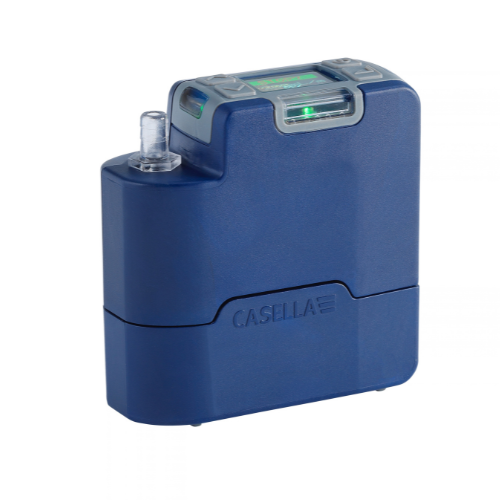
VAPex Air Sampling Pump - Standard
VAPex Pump - Pro
The VAPex™ Pro builds on this with Bluetooth connectivity for remote configuration and monitoring via the Airwave App, plus onboard timer functionality and logging of both flow and motion — giving hygienists and EHS managers a fuller audit trail when standardising sampling across a fleet of pumps or a multi-site campaign.
Go To VAPex™ Pro Product Page >>
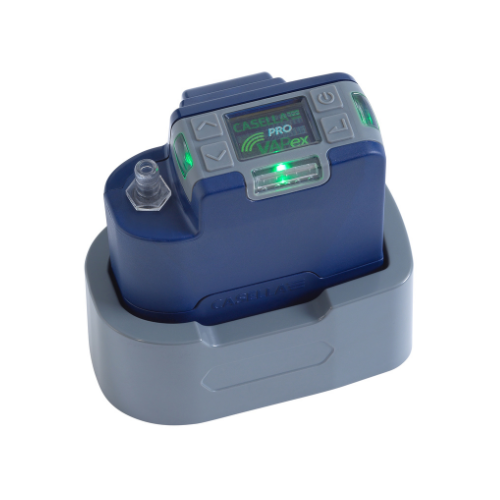
VAPex Air Sampling Pump - Pro.
References
- Health and Safety Executive (HSE). Control of Substances Hazardous to Health Regulations 2002 (COSHH). legislation.gov.uk/uksi/2002/2677
- Health and Safety Executive (HSE). EH40 Workplace Exposure Limits. hse.gov.uk/pubns/priced/eh40.pdf
- Occupational Safety and Health Administration (OSHA). 29 CFR 1910.1000 — Air Contaminants;. osha.gov/laws-regs/regulations/standardnumber/1910/1910.1000
- American Conference of Governmental Industrial Hygienists (ACGIH). TLVs and BEIs — Threshold Limit Values and Biological Exposure Indices. acgih.org/tlv-bei-guidelines
- National Institute for Occupational Safety and Health (NIOSH). NIOSH Manual of Analytical Methods (NMAM). cdc.gov/niosh/nmam
- International Organization for Standardization. ISO 16200-1:2001 — Workplace air quality: Sampling and analysis of volatile organic compounds by solvent desorption/gas chromatography, Part 1: Pumped sampling method. iso.org/standard/30187.html