 汉语
 English
 Français
 Deutsch


From Strategy to Sampling
In Part One we looked at why personal, breathing-zone sampling is the preferred route to a time-weighted average (TWA) personal exposure measurement. Part Two covers the practical detail that can help demonstrate the measurement validity: choosing the right sampling medium, building the sampling train correctly, understanding what the laboratory is analysing for, and calibrating the pump before and after every sample.
Sampling Media
The “suitable sampling medium” for a given chemical depends on the sampling and analytical method selected, and is usually a form of sorbent tube (glass or re-usable metal). Validated methods are published by the Health and Safety Executive (HSE) in the UK as Methods for the Determination of Hazardous Substances (MDHS), and by NIOSH in the US as the NIOSH Manual of Analytical Methods (NMAM). Always confirm you are working from the current version of the method, as sampling parameters and exposure limits are revised over time.
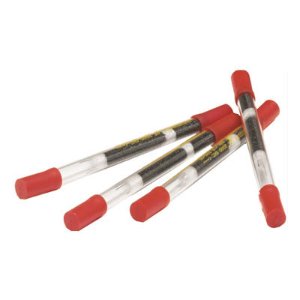
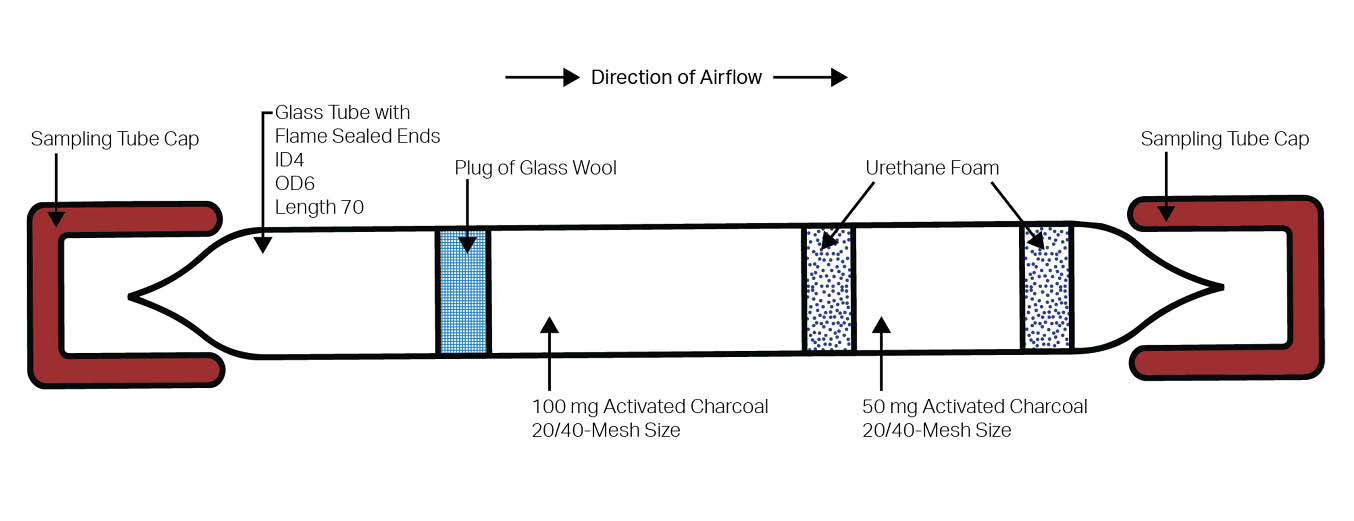
Sorbent tubes remain a reliable sampling method for a wide range of vapours and gases. A sorbent tube contains a chemically inert material that adsorbs the vapour or gas onto its surface during sampling. Activated charcoal is the most common sorbent, but silica gel and other specialist materials are used depending on the target analyte and method. Most tubes contain two layers of sorbent, with the smaller “back-up” layer positioned closest to the pump. An arrow printed on the tube indicates the correct direction of airflow. Each layer requires a specified mesh size and weight of material, which is why tubes should only ever be sourced to the method’s specification.
Setting Up the Sampling Train
A well-built sampling train is the simplest way to protect data quality. Before sampling:
- Check the expiry date. Tubes must be in date before the ends are broken off.
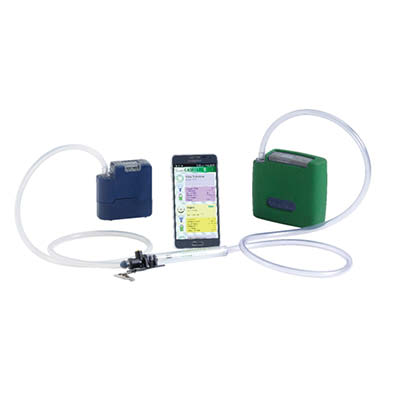
- Connect correctly. Insert the opened tube into a tube holder and connect it to the personal sampling pump using chemically inert tubing, with the arrow pointing towards the pump.
- Handle with care. Glass tubes are fragile, so take care when breaking the ends and assembling the train.
- Leak-check. Check the full train carefully, as a leak means the pump is not drawing the intended air volume through the tube.
- Position vertically. Mount the tube in a near vertical position in the worker’s breathing zone. Horizontal or sloping placement can cause “channelling” within the sorbent bed, which can lead to an underestimate of exposure.
After Sampling: Analysis and Breakthrough
Once sampling is complete, cap the tube ends with the caps provided and send the tubes to the laboratory, together with unused control (blank) tubes from the same batch. The sorbent is desorbed chemically, or thermally, depending on the tube type, and analysed, generally by gas chromatography (GC). The two sorbent layers are analysed separately. If the back-up layer contains more than 10% (check local guidance as this percentage varies) of the amount found on the main layer, the tube is deemed saturated and breakthrough has occurred, meaning some of the contaminant passed through uncollected. In this case the result cannot be relied on and a repeat sample is needed, potentially adjusting the sampling time, flow rate or tube size to improve the chance of a valid sample. For EHS managers, this is a good reason to plan monitoring with contingency, particularly for tasks with unpredictable concentrations.
Calibration
The chosen method will specify a sampling flow rate, which must be set with a suitable flow calibrator before sampling and verified again afterwards. Maintaining a steady flow within ±5% is vital, because the sampled air volume (and therefore the reported concentration) is calculated from the flow rate and sampling time. A simple rotameter can be used in the field, but a digital flow calibrator such as the Casella Flow Detective is preferable for its precision and accuracy. Check local legislation and guidance for the flowmeter and calibration requirements in your own country.
Current-generation Casella pumps and calibrators also feature Bluetooth connectivity. This allows the calibration process to be fully automated, reducing the risk of set-up errors and saving the hygienist valuable time. Sample progress can also be checked remotely via a dedicated phone app without disturbing the worker, which improves productivity for worker and hygienist alike. Pump performance requirements are covered by ISO 13137, which specifies performance requirements and test methods for battery powered personal sampling pumps.
Conclusion
Like many routine measurements, vapour sampling rewards attention to detail. Check for changes to methods and exposure limits, confirm that your measuring equipment is up to date and regularly serviced, and keep calibration records with every sample. Developments in pump and flow technology can improve accuracy and productivity, and may justify reviewing your fleet of pumps.
Recommended Products
Both variants in the VAPex™ range are built on the same low-flow, back-pressure-stable platform described above, differing mainly in the level of remote control and logging on offer.
VAPex Pump - Standard
The VAPex™ Standard covers the core requirements of personal vapour and gas sampling: intrinsically safe operation, motion sensing to confirm the pump was worn, and a constant pressure mode for multi-tube sampling, all backed by a Li-Ion battery rated beyond 34 hours at typical sampling flow.
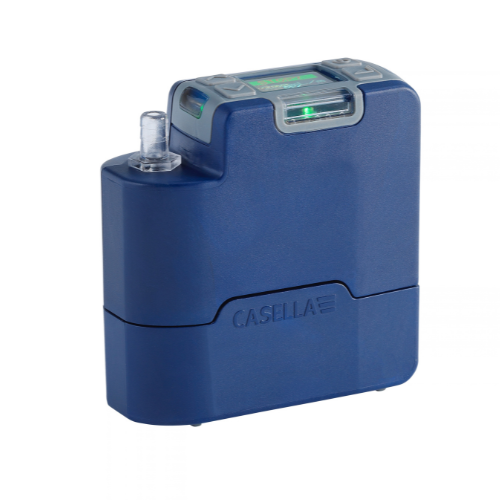
VAPex Air Sampling Pump - Standard
VAPex Pump - Pro
The VAPex™ Pro builds on this with Bluetooth connectivity for remote configuration and monitoring via the Airwave App, plus onboard timer functionality and logging of both flow and motion — giving hygienists and EHS managers a fuller audit trail when standardising sampling across a fleet of pumps or a multi-site campaign.
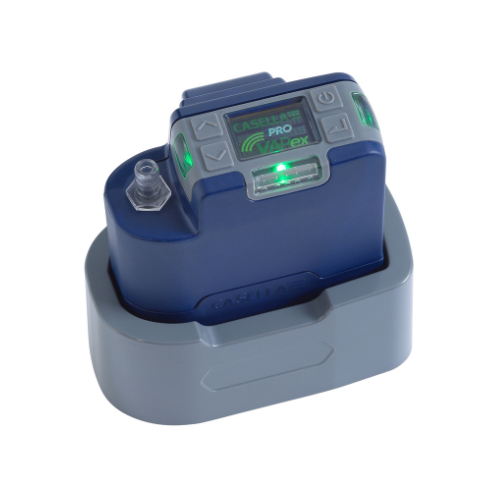
VAPex Air Sampling Pump - Pro
References
- Health and Safety Executive (HSE). Methods for the Determination of Hazardous Substances (MDHS). hse.gov.uk/pubns/mdhs/index.htm
- National Institute for Occupational Safety and Health (NIOSH). NIOSH Manual of Analytical Methods (NMAM). cdc.gov/niosh/nmam/default.html
- International Organization for Standardization. ISO 13137:2022, Workplace atmospheres: Pumps for personal sampling of chemical and biological agents. Requirements and test methods. iso.org/standard/79682.html